Key research initiatives, AI systems, and biomedical engineering projects in reverse chronological order.
AMIE: Conversational Diagnostic Medical AI
Co-led multiple research studies developing and evaluating AMIE (Articulate Medical Intelligence Explorer), an LLM-based conversational AI designed for diagnostic dialogue, multimodal reasoning, and specialty management.
- Designed synthetic dialogue simulation environments to train and evaluate medical agents.
- Developed multi-agent systems which balance conversational fluidity and accurate clinical reasoning and audio-visual perception.
- Conducted evaluation studies to understand the performance of medical AI systems like AMIE on the spectrum from simulated evaluations to randomized studies with patient actors to real-world studies with patients.
Medical Vision-Language Models
Research on self-supervised medical image-text models (i.e. CLIP).
- Improved fine-grained visual localization with a novel patch-token entropy penalty which encourages precise anatomical correspondence between chest radiographs and text radiology reports.
- Demonstrated that text-image self-supervision dramatically diminishes vulnerability to synthetic watermark shortcuts compared to supervised convolutional networks.
- Explored conformal prediction methods for zero-shot classification with CLIP-style models.
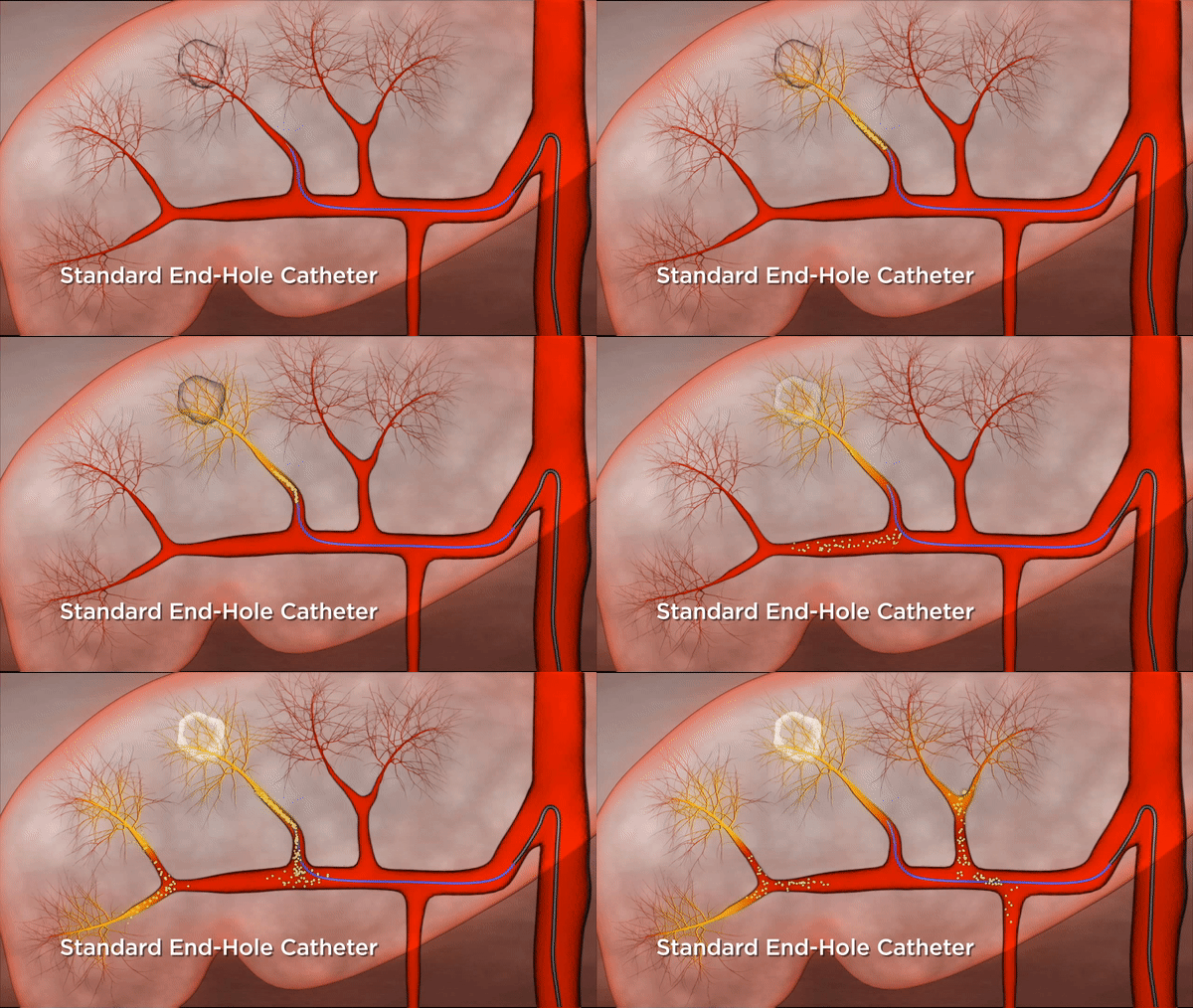
EmboQuant: Quantifying the Transarterial Embolization Endpoint
Designed a novel pressure-sensing multilumen catheter system to establish quantitative real-time endpoints for transarterial embolization procedures, preventing dangerous off-target non-target bead reflux.
- Constructed in-vitro microfluidic vasculature models with computer vision tracking to characterize downstream bead deposition and vessel pressure relationships.
- Demonstrated that pre-embolization occlusion pressure accurately predicts the ideal physiological stopping point for bead infusion.
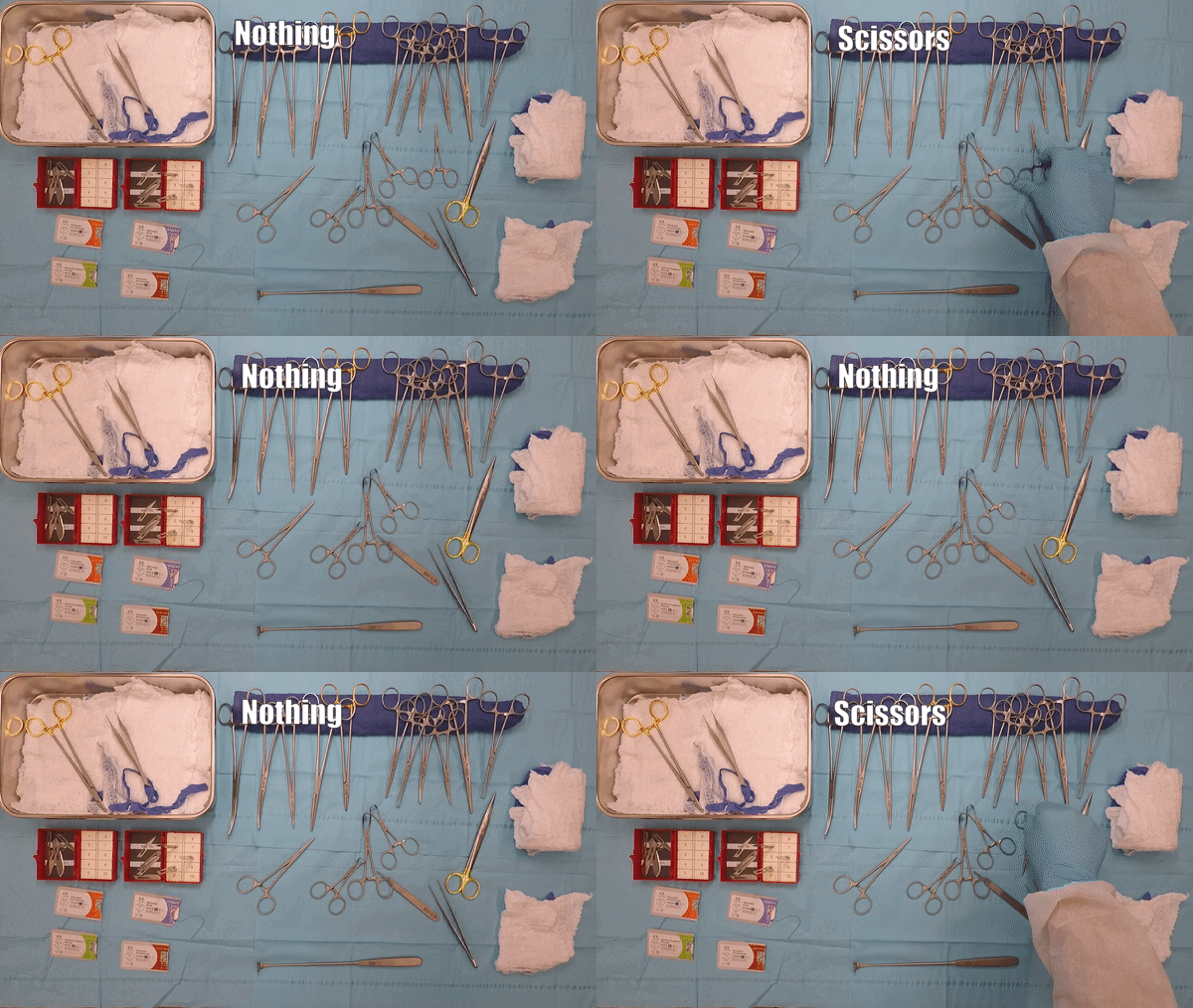
Real-Time Surgical Instrument Tracking in the Operating Room
Engineered a CNN-based perioperative video analysis pipeline to track surgical instruments during procedures, identifying unused tray instruments to reduce hospital sterilization overhead and prevent retained foreign objects. Implemented optical flow-based post-processing to cut manual annotation needs by over 90%.
Epileptogenic Zone Localization & Intracranial EEG Analysis
Developed non-invasive scalp EEG source localization and automated intracranial EEG spike detectors to guide pre-surgical planning for patients with medically refractory focal epilepsy.
- Evaluated concordance between scalp EEG source inversion, structural MRI, and invasive intracranial depth recordings in predicting surgical resection success.
- Formulated simple signal processing algorithms for interictal spike detection on EcoG.
Demonstrates concordance between pre-surgical non-invasive scalp EEG source localization and surgical resection outcomes in medically refractory focal epilepsy.
Evaluates robust, energy-efficient signal processing algorithms for intracranial EEG interictal spike detection, providing baseline performance benchmarks for neuro-monitoring implants.